Potholes and the Effect on Tyre Cord: Micro-Damages With a Disastrous Result
- maxandersonuk
- Dec 23, 2025
- 4 min read
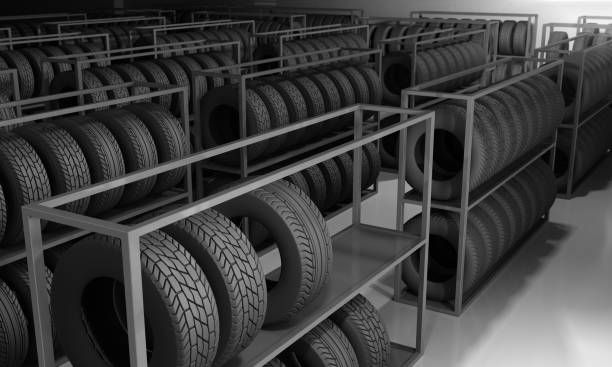
Potholes, that nightmare of all motorists, are not only an inconvenience in the form of a bump. When your vehicle strikes one, in particular at high velocity, the impulse that runs along through your car's tyre and wheel is colossal. As much as the immediate damage may be in the form of an offset rim or instant flat, the most sinister damage may lie in the micro-damage to the tyre cords.
This concealed influence that interferes with the internal composition of the tyre may result in a life-threatening, delayed catastrophic failure, a number of weeks or months after the original blow. It is necessary to know the way this micro-damage takes place to drive responsibly and be safe.
The Operating Principles of a Tyre: Not Rubber Only
A contemporary radial tyre is an engineering miracle, and it is comprised of many layers, which contribute to its strength, flexibility, and road grip. The plies and cords form the inner layers, which are the core strength.
Carcass Plies: These are the textile (usually polyester or nylon) cords that run opposite to the bead and constitute the bulk and the strength of the tyre.
Belt Plies: This is a layer of stuff that is usually composed of steel cords, and they are positioned beneath the tread, assisting in stiffening the tyre and also ensuring that the treads do not move. They also make the tyre puncture-resistant.
These tether belts (especially the steel belts) are practically the skeleton of the tyre. They are shaped, compressible to internal air pressure, and strong enough to control the high acceleration, braking, and corner forces.
The Pothole Impact: When Your Car Is Accidentally Compressed
The force is concentrated when the tyre hits the sharp edge of a pothole. The rigid rim flange is rudely forced into the hard edge of the road, forcing against the sidewall. This act creates localised extreme stress, which can be hundreds of times higher than the normal operating conditions.
This micro-damage to the cords is of three main types caused by this sudden stress:
Cord Shearing and Breaking
Most of the damage is the shearing or breaking of the internal textile or steel cords. The external rubber might not bear the evidence of any damage, but the inside structure is broken. Suppose you snap a bunch of wires; this bunch of wires will break, and yet there will be this bunch of wires--at least, for the moment. This tearing is usually done on the part of the cord that crosses the sharp lip of the rim flange.
Ply Separating (Delamination)
The cords are incorporated in rubber that serves to serve as a bonding agent. The effect may result in the separation of the rubber layer and the steel belts or textile plies, which is known as delamination. When the rubber bond is disrupted, moisture and air will be able to get inside the internal structure, rust will occur on the steel cords, and the deterioration will increase. This is the area of weakness, and it is a favourite location in which failure may occur in the future.
Inner Liner Cracks
The air-tight seal is the inner liner of the tyre. Depending on the impact caused by severe potholes, small cracks may be formed in this liner, which are usually invisible. These cracks cause slow movement of air out of the main pressure chamber into the tyre structure itself, getting trapped between the plies.
The Disastrous Vault: Bulges and Blowouts of the Sidewalls
The final result of the micro-damage to the cord is usually a sidewall bulge or an abrupt blowout.
Sidewall Bulge: This is the visible evidence that the inner cords are seriously damaged or broken. Because the structure is no longer supported by the cords, the internal air force causes the rubber to push outwards at the damaged area, forming a distinct lump. This swell is a very precarious fault, because the air of that spot is supported by the comparatively thin rubber only. You should never ignore this. In case you are around the Somerset vicinity and you feel that there is some undetectable damage even following a heavy impact, immediately consult a specialist in tyres Somerton.
Blowout: When the vulnerable part gives in to the pressure during the driving stage, particularly on highways, it will be a catastrophic blowout, resulting in total loss of control.
Anticipation and After-Pothole Response
The only way to avoid this hideous manner of damage to your vehicle as well as to yourself is to drive safely through pothole-infested roads. If you do hit a major pothole:
Check Immediately: Look at the sidewall and tread to see whether any immediate cuts, bulges, or distortions appear.
Check Pressure: Keep checking your car's tyre pressure regularly for a few weeks after the accident. A sudden drop could be considered a slow leak caused by a damaged liner or bead seal.
Professional Inspection: In case of a strong jolt, it is better to seek the services of a professional garage that would be able to demount the tyre and check the inner liner to exclude the possibility of cord separation and micro-cracks.
Conclusion
The integrity of your car tyres is important to your safety. A minor inconvenience should not develop into a long-lasting issue. If you need new tyres or even a check in South Wales, you may like to buy tyres in Newport from a good supplier, to make sure that you receive good tyres that can resist normal wear and tear on the road.


Comments